
- Home
- Applications
- Environment And Wastewater
- Wastewater Treatment
- Treatment of Wastewater from Stone Cutting
Treatment of Wastewater from Stone Cutting
1. Sources and Characteristics of Stone Processing Wastewater
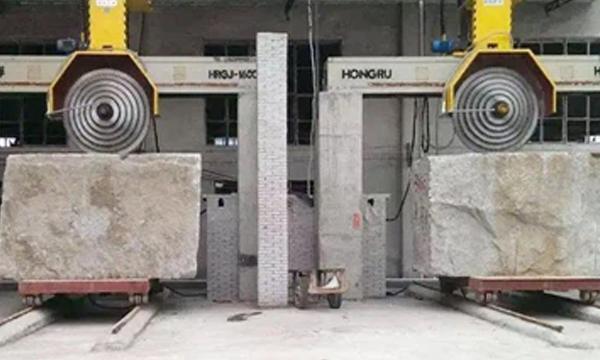
The general process of stone processing is: raw stone → sawing → polishing → shaping → finished product.
Pollution from stone wastewater can cause serious water pollution, turning once clear streams into “milky streams,” severely impacting the habitat of aquatic organisms. Due to historical reasons, many stone processing enterprises were originally located upstream of cities. Stone processing projects lack planning and management, and are scattered across different regions. Environmental protection facilities are inadequate, and large amounts of production wastewater containing high concentrations of suspended solids (SS) are discharged into downstream river sections without treatment. This not only wastes a large amount of precious water resources but also causes serious environmental pollution, attracting widespread attention. A type of cutting wastewater treatment equipment.
Saw blade cutting wastewater (saw machine wastewater)
The main pollutants in slate material processing wastewater are stone powder and the “cooling fluid” added to the saw blade cooling water. The main components of general coolants include: resin acids and their saponifications, unsaturated fatty acids and their saponifications, lignin and its degradation products, among which resin acids are mainly rosin acid and pithiacin acid.
Factory Wastewater and Trimming Machine Wastewater
After raw materials are processed into slabs, the surface of the slabs usually requires further polishing. During the polishing process using a polishing machine, a large amount of dust pollutants are generated. To reduce pollution, water is usually used as an auxiliary dust collector. The main components of this type of wastewater are suspended solids (SS) and stone powder. Stone cutting and polishing processes generate a large amount of highly turbid wastewater, causing water waste and environmental pollution. Especially in small stone processing enterprises, wastewater is directly discharged, causing serious pollution to surrounding water bodies.
2. Performance Analysis of Horizontal Screw Centrifuges
Horizontal screw centrifuges have the characteristics of wide applicability, small footprint, large continuous processing capacity, fewer personnel, simple operation, low labor intensity, clean working environment, good dehydration performance, low total operating cost, and good overall effect. Currently, they are a popular piece of equipment for wastewater treatment in domestic enterprises. Horizontal screw centrifuges utilize the principle of centrifugal sedimentation for solid-liquid separation. Without a filter, clogging is avoided. The continuous-operation sedimentation equipment features a compact structure, continuous operation, stable operation, high production capacity, and convenient maintenance. The machine has good adaptability and corrosion resistance. Components in contact with materials, such as rollers and conveying screws, can be made of stainless steel to ensure the machine’s service life. The design fully considers the various special requirements of environmental sludge treatment processes on centrifuges, and optimizes the design of key performance components in terms of specialization and adjustability. Before purchasing the machine, users need to be informed of the physicochemical properties of the treated sludge and the process requirements so that a suitable model can be provided. Before purchasing the machine, the user needs to be informed of the physicochemical properties of the treated sludge and the process requirements in order to provide a suitable model.
Separation Objectives: Solid-phase dewatering, liquid-phase clarification separation; liquid-liquid-solid three-phase separation; particle size classification.
Different materials being separated have different separation characteristics. Even for the same material, different process methods and operating conditions will result in different separation characteristics. The characteristics of the materials being separated directly affect the centrifuge’s separation effect and processing capacity.
Settling velocity is an important indicator of separation characteristics and plays a decisive role in sedimentation separation. Settling velocity mainly depends on the size and shape of the solid particles, the density ratio between the solid and liquid phases, and their viscosity.
Settling velocity can be adjusted and improved through the following measures:
1. Adjust the operating temperature, increase viscosity, and increase the density ratio between the liquid and solid phases;
2. Add flocculants to increase the size of solid particles and change their shape.
PROFESSIONAL CENTRIFUGE EQUIPMENT MANUFACTURER
Please fill out the form below and we will get back to you as soon as possible.